A Compost Pile Changes as Its Ingredients Break Down
Learn to read compost pile changes, adjust moisture and airflow, and choose a suitable use without mistaking a dark, crumbly texture for proof of safety.
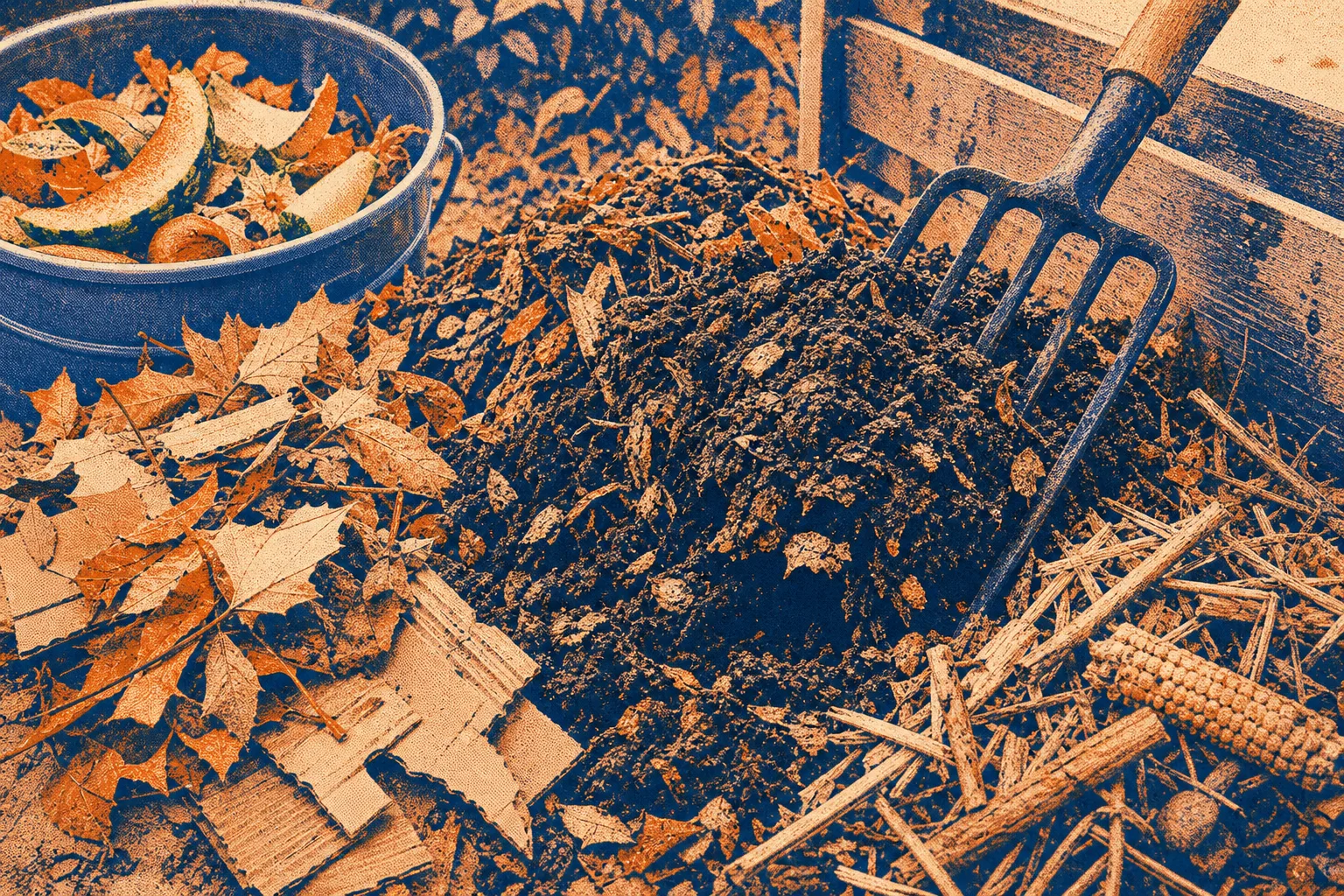
Compost pile changes show up in the center before they are always obvious at the surface: wet scraps may collapse into a dense patch while dry leaves still look unchanged. Read texture, moisture, and odor together to decide whether to add dry structure, loosen material, add water, or leave the pile alone.
Fresh ingredients remain visible at the surface
Vegetable trimmings, coffee grounds, dry leaves, and shredded cardboard keep their original shapes for a while. Soft scraps may collapse quickly as they lose water, while woody stems and thick stalks remain recognizable longer. A handful of dry leaves can hide wetter material beneath it, so check below the surface before adding water.
Small organisms use available food as ingredients settle into the pile. Cutting bulky scraps into smaller pieces exposes more surface, but finely chopping every peel is not worth the effort. A mix of ordinary pieces is enough for most home piles.
- Soft greens: Fruit and vegetable scraps, fresh weeds without mature seed heads, and coffee grounds add moisture and nitrogen-rich material. If the center feels slick or clumps densely, mix in dry, bulky browns; if it is loose and only slightly damp, leave it mixed in.
- Dry browns: Dry leaves, torn uncoated cardboard, and straw add carbon-rich material and help create air gaps. If the pile is wet and compact, mix in these browns; if it is already dry and loose, hold off and check moisture before adding more.
- Tough pieces: Corn cobs, woody stems, and coarse stalks may remain recognizable after softer ingredients change. If a rough texture suits the intended use, leave them; if finer material is needed, break them up or return them to a newer batch.
- Clumping scraps: Wet melon rinds and similar soft additions can pack together. If a dense patch forms, loosen it and mix in dry leaves or torn cardboard; if the material is springy and damp, leave it to continue changing.
- Dry outer leaves: A dry surface does not show whether the center needs water. If the center is dusty and barely holds together, add water gradually while turning; if it is damp, do not water just for the surface appearance.
- Strong odors: Sour or rotten smells can point to overly wet, compacted material with too little air. If the odor comes from a dense patch, loosen it and mix in dry browns; if the pile is loose and smells mildly earthy, leave it undisturbed.
These labels describe broad roles, not fixed recipes. A pile made from one kind of material behaves differently from one with varied textures. Aim for a mixture that is neither a wet mass of clinging scraps nor a loose stack of dry leaves.
Mixed materials settle into a working layer
As decomposition proceeds, fresh pieces soften, darken, and become less distinct. The pile also settles because the original materials lose volume and spaces between them collapse. Settling is normal; by itself, it does not mean the pile has stopped changing.
Texture offers useful clues. A handful from the middle that feels slick and forms a dense clump may signal excess moisture or too little open structure. If it is dusty and barely holds together, it may be too dry. A balanced handful feels damp, like a wrung-out sponge, without releasing water when gently squeezed.
Say you add a bucket of wet melon rinds and a scoop of coffee grounds to a loose pile of dry oak leaves. At inspection, you find a heavy, compressed patch in the center. You loosen that patch with a garden fork, then mix in a handful of torn cardboard and another handful of dry leaves. The expected observable result is a more open, evenly damp mixture. If it still forms a sticky lump, add another handful of dry material and loosen it again; if it feels springy and damp, stop adjusting it.
Do not treat every compact patch as an emergency. A small, localized clump can be loosened when you turn or fork the pile. Persistent sour or rotten odors, however, suggest that the heap may need more air or may be holding excess water.
Air and moisture shape compost pile changes
Decomposers need water, but saturated material leaves less room for air. Air moves through pores between ingredients, so coarse, springy material can help keep a heap open. Dry leaves, chopped stems, and torn cardboard provide structure, while very wet scraps tend to pack together.
Turning the pile introduces air and redistributes material. A garden fork is enough for a small heap: lift and loosen the compacted center rather than simply smoothing the top. Turning is useful when the pile feels dense, smells unpleasant, or stays unevenly wet. You do not need to disturb a pile on a fixed schedule if its texture and smell are acceptable.
Moisture needs shift with weather and ingredients. Rain may soak an uncovered heap, while hot, dry conditions can leave its edges parched. Check beneath the surface before adding water; a dry outer layer may cover a damp center. If the center is dry, add water gradually while turning so it spreads through the material rather than running down one side.
A cover can help manage heavy rain or drying wind, but it should not seal the pile airtight. A tarp laid loosely over the top can shed some rain while leaving the sides open to air. A sheltered corner may need less cover than a heap exposed to sun and wind.
Later material loses its original identity
As recognizable scraps break down, the contents become darker and more uniform. The heap may feel less warm than during active decomposition, and fewer original pieces may be visible. These signs suggest a shift in activity, not a precise finish date: coarse twigs, eggshell fragments, or tough stems can remain after softer matter has changed substantially.
Partly decomposed material can still be useful beneath a newer batch or as mulch where a coarse texture is acceptable. For seed starting or delicate plantings, a dark, crumbly appearance alone does not establish that compost is mature or suitable. Use a product intended for that purpose, or seek guidance from a local extension service or another qualified gardening professional if suitability is uncertain. For other garden uses, match the material to the plants and follow applicable local advice.
Screening is optional. A simple mesh screen separates finer compost from stubborn chunks, which can go back into the active pile. For garden beds that can accept rougher material, sorting every twig is unnecessary; choose the degree of refinement to suit the intended use.
How should you interpret common compost pile changes?
Why does the center feel warmer than the edges?
The center is more insulated and tends to hold moisture, so decomposition may be more active there than at the exposed edges. Turning can move outer material inward, though warmth alone does not establish that compost is mature or safe for a particular use.
Why are some scraps still easy to recognize?
Materials break down at different rates, and thick or woody pieces resist softening more than tender leaves and vegetable scraps. Chop or return stubborn pieces to a newer batch if you need finer compost; leave them if the intended use accepts a rough texture.
What does a sour smell usually mean?
A sour or rotten odor can point to wet, compacted material with too little air. Loosen the heap with a fork and mix in dry, bulky browns such as leaves or torn cardboard, then check whether the odor eases as the material becomes more open.
Can a cool pile still be changing?
Yes. A small pile, a dry pile, or a heap with fewer easily decomposed ingredients may not feel warm even as its contents slowly soften. Watch texture and the amount of recognizable material as well as temperature, and do not treat either warmth or coolness as a safety test.
Match each adjustment to a visible clue
Use the condition of the material to guide small adjustments rather than following an invented universal timetable. Check a handful from the center, notice whether the pile is compact or loose, and consider the intended use before deciding that it is ready.
When adding scraps, cover especially wet or aromatic food with dry browns. Diseased plants, pet waste, and materials treated with persistent chemicals may require specialized handling or a composting method suited to those materials; do not assume an ordinary home pile will address the concern. Check local composting guidance or consult a qualified professional when the material or intended use raises a safety question.
Compost pile changes can guide choices about airflow, moisture, and texture, but appearance alone cannot establish safety for every use. Keep the intended destination in view: coarse material may suit a rough mulch layer, while seed starting calls for a product and handling method specifically appropriate to that purpose.
Nearby ground
The Jar Test Is a Clue, Not a Soil Verdict
A soil jar test gives a rough visual comparison of sand, silt, and clay layers, helping…
How to Match Root Depth and Spread to Garden Space
Match root depth and spread to beds, containers, and neighboring crops to choose a planting place…