The Underground Neighbors Around Plant Roots
Understand plant root-zone relationships, read common signs with care, and choose a sensible next step without treating soil organisms as automatic threats.
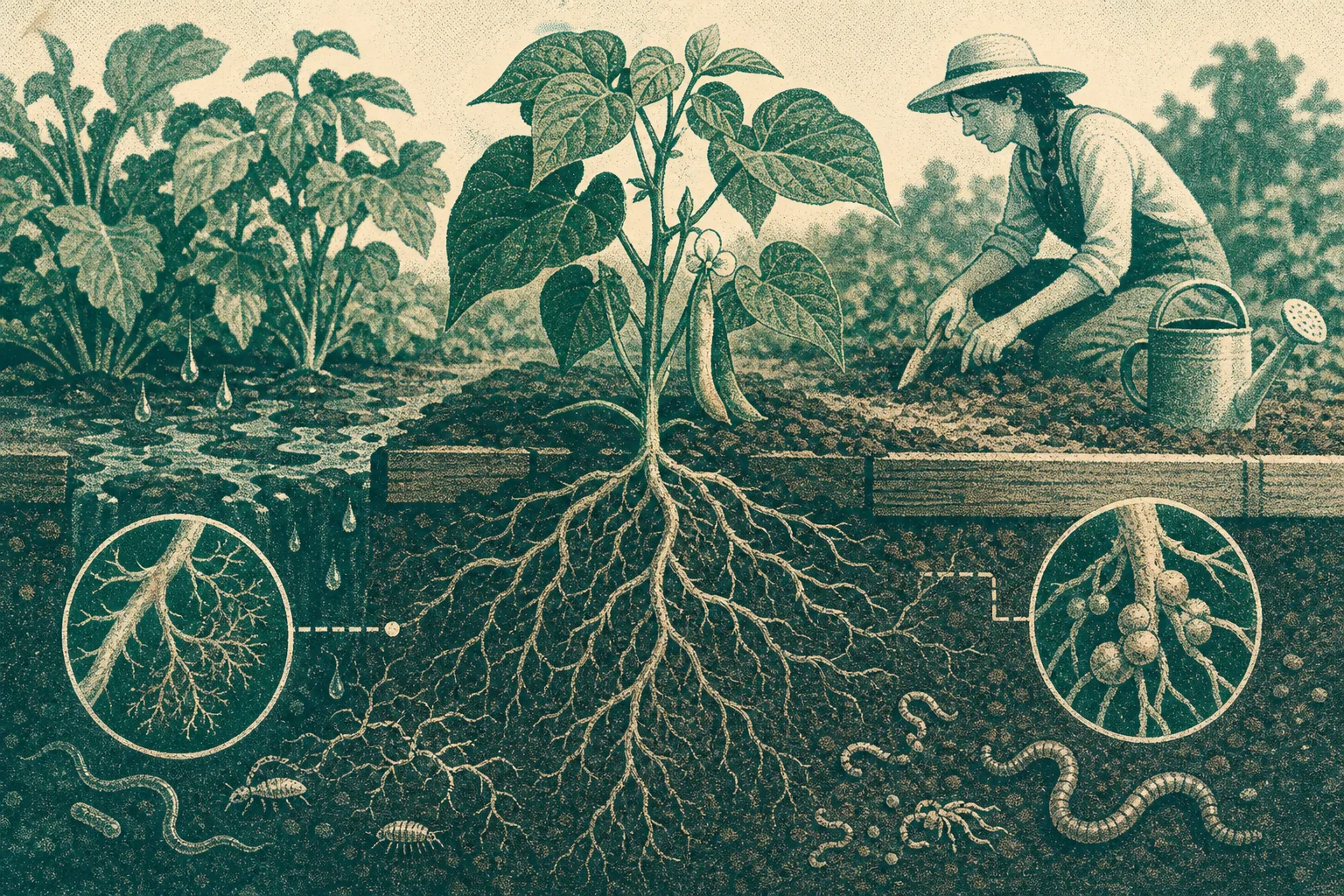
Plant root-zone relationships can shape what happens in the soil around a root, but visible fungi, bacteria, or tiny animals do not reveal whether a plant is thriving. The rhizosphere—the narrow zone influenced by roots—is a busy place where interactions vary by plant and conditions.
Roots release compounds that other organisms may use. Some interactions benefit the plant, some can harm it, and many have no obvious effect. A gardener can observe symptoms and growing conditions, but identifying an organism’s role may require expert diagnosis.
Root-zone relationships depend on their effects
Three terms describe how a plant and another organism affect one another:
- Mutualism: both participants benefit. In some plant-fungus partnerships, a plant supplies sugars while fungal threads explore soil for resources the plant can use.
- Parasitism: one participant benefits at the plant’s expense. A disease-causing organism may damage tissue, though visible damage alone does not identify the cause.
- Neutral coexistence: an organism lives near a plant without a noticeable effect under those conditions.
These describe interactions, not permanent labels for every member of a group. A gardener usually cannot infer an organism’s role from soil appearance alone.
Keep symptoms separate from causes. Wilting, discoloration, or damaged roots are observations; a fungal disease, nutrient issue, or other diagnosis is an explanation that may need closer examination. This distinction helps prevent treatment based on a guess.
Fungi can associate with roots or contribute to disease
Mycorrhizal fungi form associations with the roots of many plants. Their fine threads, called hyphae, extend through soil. In some associations, the plant supplies sugars, while the fungus may help the plant access resources in the soil it explores. The details vary, so the presence of fungus is not proof of benefit.
Not every plant forms the same associations. Many cabbage-family plants, for example, are not typically associated with the common mycorrhizal partners found with many other garden plants. Before considering an inoculant, check whether it is suitable for the plant and intended use. A product will not correct an unsuitable site or damaged roots, and a plant growing well may give no clear reason to add one.
Other fungi can contribute to root or lower-stem disease. Wilting while soil is wet, soft or discolored roots, and uneven decline can be clues that something is wrong, but none proves a fungal cause. Root injury, poor drainage, planting stress, and other problems can produce similar signs.
If a valuable plant continues to decline, a local extension service, plant clinic, or qualified horticulture professional can advise whether diagnostic examination is appropriate. Symptoms help describe the problem; confirming a cause may require inspecting roots, comparing affected and healthy plants, or using diagnostic methods.
Bacteria and small soil animals have varied roles
Root-associated bacteria use compounds released by plants. Some may affect nutrient availability or compete with other microbes; others may have no noticeable effect. Soil color and root density do not reveal which role a particular bacterium has.
Legumes such as peas and beans can form associations with compatible bacteria in root nodules, which help make nitrogen available to the plant. Nodules are visible swellings, but seeing them does not establish how well the plant is functioning. Plant condition and growing conditions still matter.
Nematodes are microscopic roundworms with different diets. Some feed on bacteria, fungi, or other small animals; others feed on plant tissue. The word “nematode” alone does not establish a pest problem. Suspected root-feeding damage may need diagnostic help rather than a conclusion based on symptoms alone.
Springtails and mites may feed on fungi, decaying material, or other tiny organisms. Earthworms affect surrounding soil as they feed and move through it. Their presence does not, by itself, show that a plant’s roots are healthy or damaged.
Use observations to choose a proportionate response
Start with what you can see. Each observation below points to a decision and an alternative action:
- Observation: A plant is growing steadily without unexplained decline. If it remains healthy, then leave its roots undisturbed; otherwise, note the change and inspect growing conditions.
- Observation: Soil remains soggy after watering. If it does, then review drainage and watering; otherwise, do not assume excess water explains the symptoms.
- Observation: Several plants in one bed show similar decline. If they do, then compare shared conditions such as watering and site; otherwise, consider the individual plant’s history and care.
- Observation: Roots are soft, discolored, or visibly damaged. If they are, then record what you see and seek diagnostic advice if decline continues; otherwise, look for other clues rather than assuming disease.
- Observation: An inoculant label names a plant group or fungal association. If the label does not fit the plant or its use is unclear, then skip it and ask a knowledgeable local source; otherwise, consider it only for a specific reason.
- Observation: A diagnosis is uncertain and treatment could affect other plants. If uncertainty remains, then consult a plant clinic or qualified professional; otherwise, follow guidance that matches the identified problem.
Say you are caring for a fictional bean bed with pale leaves and slow growth beside a healthy bed. You inspect both beds and find the bean bed’s soil stays saturated after watering, while the other bed drains freely. You adjust watering in the bean bed and address its drainage, then check whether the soil still stays soggy and whether new growth changes. If decline continues, you contact a local plant clinic and share the symptoms and conditions rather than declaring a fungus responsible. The tradeoff is time spent observing before treatment in exchange for avoiding a product chosen on an unconfirmed diagnosis.
It is not worth trying to identify every microorganism in an ordinary garden bed or treating every visible soil resident as a threat. A specific diagnosis matters more than a general attempt to increase or eliminate soil life.
Plant, soil, and care shape root partnerships
Plants do not all form the same relationships with soil organisms. A bean’s association with compatible bacteria differs from a plant’s possible association with mycorrhizal fungi, and neither relationship applies universally. Even plants of the same kind may encounter different conditions in different beds.
Garden practices influence the surroundings rather than selecting a perfect community. Mature compost can add organic material, but it does not specify which organisms will live around a root. Suitable surface cover can protect soil from exposure. Limiting unnecessary digging reduces disturbance, while loosening compacted ground may be appropriate when soil conditions call for it.
Water and air both matter to roots. Persistently saturated soil can contribute to root stress, while dry conditions can also make growth difficult. Match watering to the plant and soil instead of trying to keep every bed uniformly damp. Choose fertilizer according to the crop’s needs and the soil; adding it solely to “feed microbes” is not a clear reason to apply it.
How can you interpret common root-zone clues?
Should I add mycorrhizal fungi when planting?
Consider an inoculant only when it is suitable for the plant and there is a clear reason to use it. Healthy roots and appropriate growing conditions come first; an inoculant is not a substitute for them.
Are all nematodes harmful to plants?
No. Nematodes have different diets, and the group name alone does not identify a plant pest. If you suspect root-feeding damage, seek diagnostic guidance rather than relying on symptoms alone.
Can I identify helpful microbes by sight?
Not reliably. You may see roots, nodules, fungal threads, or small animals, but appearance alone rarely establishes what an organism is doing or whether it is causing a problem.
What should I do if roots look unhealthy?
Record what you observe and consider the plant’s care and surroundings, but do not treat a symptom as proof of a pathogen. If the plant keeps declining, ask a local plant clinic or qualified horticulture professional whether examination or testing is appropriate.
The underground community around roots changes with the plant and its surroundings. For root-zone relationships, record the plant’s condition and specific visible signs, then seek a diagnosis when the cause remains uncertain. That keeps routine care focused and reserves treatments for problems that have been identified.
Nearby ground
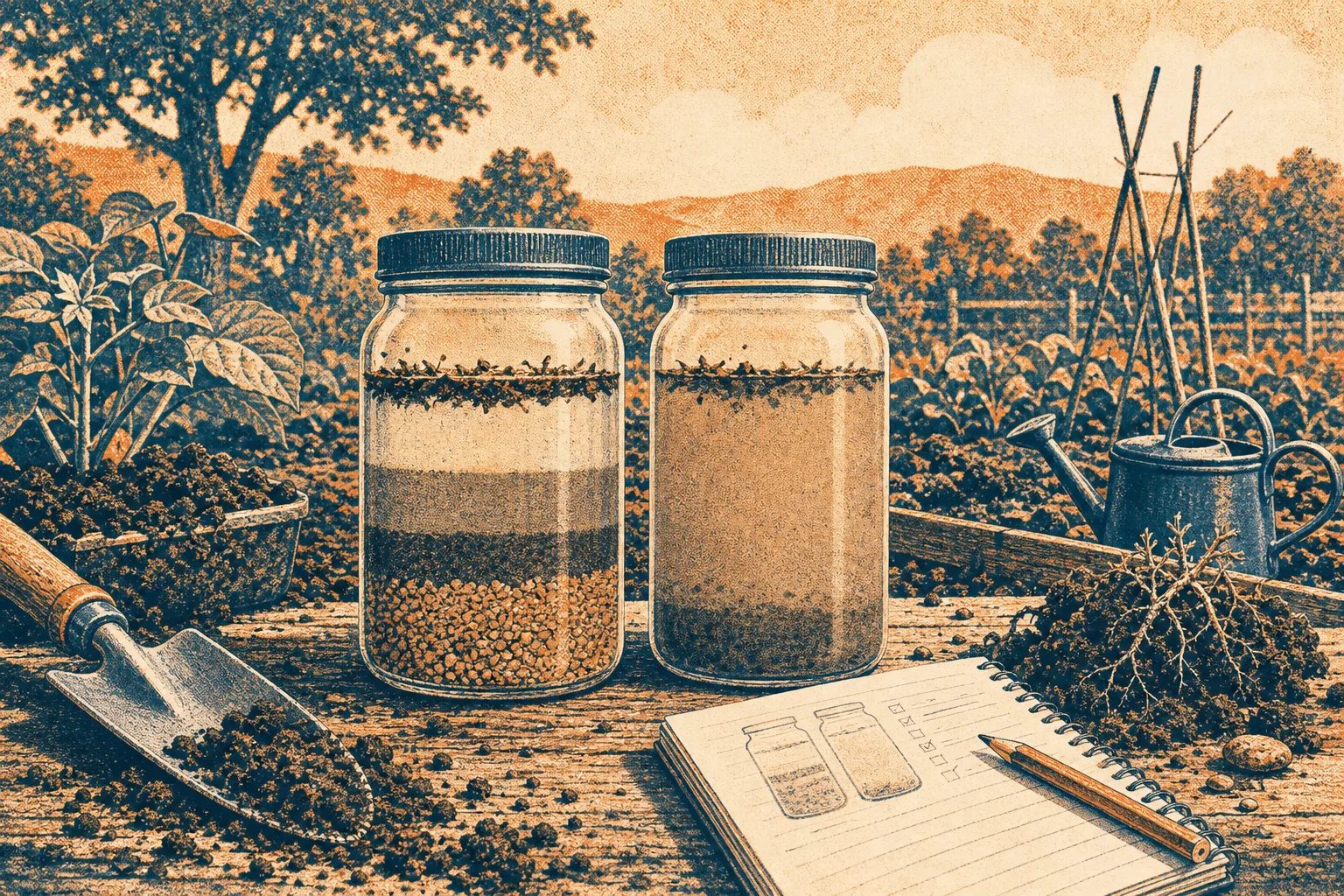
The Jar Test Is a Clue, Not a Soil Verdict
A soil jar test gives a rough visual comparison of sand, silt, and clay layers, helping…
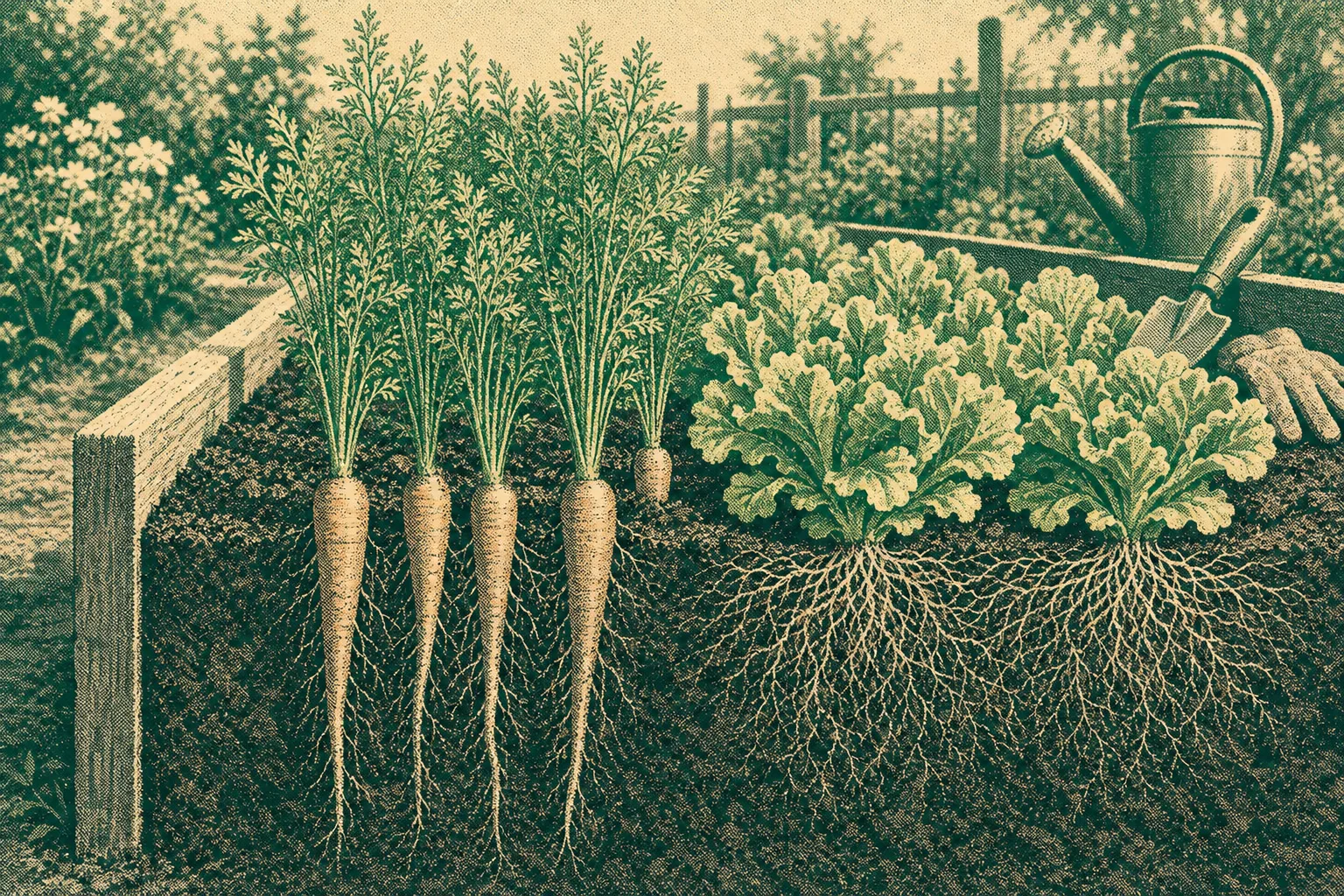
How to Match Root Depth and Spread to Garden Space
Match root depth and spread to beds, containers, and neighboring crops to choose a planting place…