A First Market Morning: What to Notice Before You Buy
A first farmers’ market visit is easier with a route, a note of local customs and one well-chosen purchase that fits your kitchen and journey home.
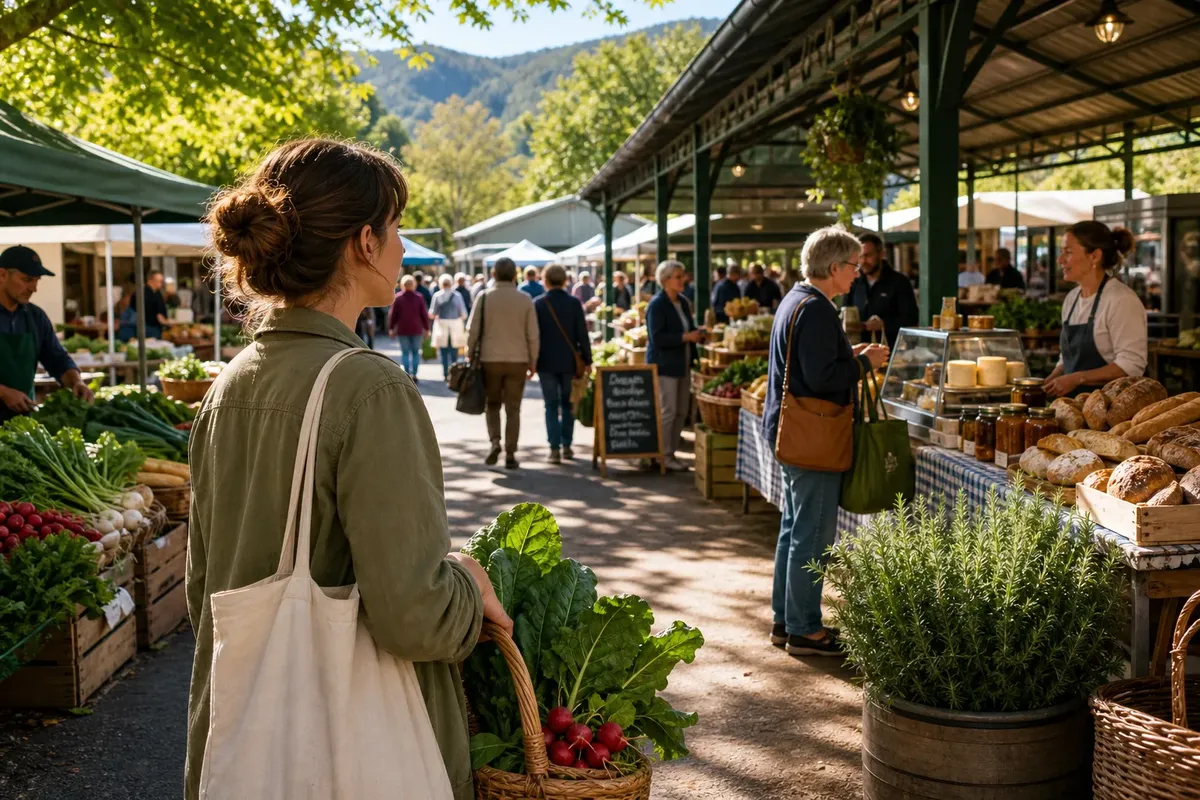
A first farmers’ market visit is easier with a route, a note of local customs and one well-chosen purchase that fits your kitchen and journey home.
Markets · 6 min read
At your first farmers’ market visit, it is easy to follow the busiest queue and miss the baker tucked along a side lane. Walk the whole site before choosing what to buy. You will learn its layout and seasonal character without turning the morning into a test of shopping skills.
How should you make your first circuit?
Start at the entrance and take one unhurried lap of every public row. Include covered sections, side lanes and any area set aside for prepared food. A grower may display leafy crops near the entrance while bread, preserves or cheese sit elsewhere; a full circuit helps you see how this particular market is arranged.
Note useful landmarks as you go: the information point, exits, seating, bins, toilets and any board naming stallholders. Look for a map or a notice about the market’s seasonal schedule. If you want to return for a particular grower or maker, these details will help you find them without retracing every row.
Listen to the market’s sounds, too. You might hear a bell from a bakery counter, a stallholder calling out the day’s greens or customers discussing what is in season. Treat those as clues to the market’s character, not evidence that one stall or crop is better than another.
What can the layout tell you about local food?
Notice which foods are grouped together and which appear as the seasons change. A market that brings growers, bakers and prepared-food sellers into one place can show how the valley’s harvest reaches local kitchens. The stalls may also reveal the market’s own customs: perhaps customers bring containers, or a community noticeboard lists a harvest supper.
Take a note of a name or crop that catches your attention. If a grower’s table has a variety you do not recognise, record its name and where the stall stands. You can ask about it on this visit or return when you have a meal in mind. There is no need to learn every crop’s origin in one morning.
Seasonal displays can change, so avoid treating one visit as a complete picture of what the valley produces. A note such as “early spring greens near the covered hall” is more useful than a broad conclusion about the market’s entire growing season.
How do you read the market’s customs?
Before joining a queue, watch how people order. Some stalls invite customers to choose items themselves; others expect the seller to serve them. Notice where customers wait, how they indicate a quantity and where payment happens. If the pattern is unclear, pause at the edge and ask, “Where should I order?”
Check notices for opening hours, payment methods, rules on sampling and any guidance about bags or dogs. These arrangements can differ between stalls. If there is no sign and the answer matters to your visit, ask the organiser or the stallholder rather than guessing.
Keep an exchange brief while people are waiting. A greeting and a question about the ordering routine are enough to get started. A quieter moment may suit a longer conversation about how a crop is grown or used; it is not worth trying to interview every seller in one visit.
How can you choose a first purchase?
Choose something that fits a meal you already expect to make and the journey home. A loaf for lunch or a familiar vegetable from a local grower can make a simple first purchase. If you are curious about an unfamiliar crop, ask how the seller uses it and whether it needs particular handling before taking it home.
Say you have planned vegetable soup and spot a grower’s sorrel. You ask how it is used, learn that its tart leaves can be stirred in near the end, and buy one bunch. You add that bunch to the planned soup; the expected result is a brighter, sharper flavour. If you cannot fit the bunch into the pot or carry it comfortably, the sensible decision is to leave it for another visit.
Before paying, make sure you know the item’s name, a likely use and how to store it until then. If one of those details is unclear, ask a short follow-up. If it still does not suit your kitchen or journey, choose something familiar—or buy nothing.
What should you check before you leave?
Use these checks to decide what to do next. They are about understanding the visit, not judging every product or comparing every stall.
- Check the map or entrance signs. If you can identify the main rows and an exit, note a route for next time; if not, ask the organiser where the rows begin.
- Check the market board for stall names or seasonal notices. If it identifies a grower or maker you want to revisit, note the stall’s location; if it does not, ask at the information point or leave the detail for another day.
- Check a stall’s ordering signs and observe where customers wait. If the process is clear, join the indicated queue; if not, step aside and ask where to order.
- Check the payment notice before choosing an item. If it lists a method you can use, proceed to the counter; if not, ask which options are available or postpone the purchase.
- Check the weather and your route home against the food you plan to carry. If your bag can keep the item secure, buy it; if not, bring another bag or choose something easier to carry.
- Check whether you can name a meal for an unfamiliar ingredient. If you can, ask about storage and decide whether it fits that meal; if you cannot, choose a familiar food or leave the ingredient.
- Check the published opening information before planning a return. If the listed time suits you, make a note of it; if not, look for another date or market rather than arriving without checking.
It is not worth the effort to record every stall, question every seller or work out the full growing history of each crop during one visit. A few landmarks and one useful exchange are enough to make the market feel more familiar.
What do first-time farmers’ market visitors ask?
Should I bring cash or can I pay by card?
Payment options vary by market and stall. Read the notice before joining a queue; if the options are not listed, ask before choosing what to buy.
Can I ask a grower what is in season?
Yes. Ask a brief, specific question when the seller has a moment, such as which local crop is ready now. If a queue forms, keep the exchange short and return later if you want to talk more.
What if I do not know how to cook an ingredient?
Ask for one straightforward way to use it, then decide whether it fits a meal you already plan to make. If the suggested preparation does not suit your kitchen, choose something familiar instead.
Do I need to arrive early?
Check the market’s published hours and choose a time that lets you walk around without rushing. If you have a particular stall in mind, check with the organiser whether it is expected to attend.
A first farmers’ market visit can leave you with more than a bag of food: you may learn where a valley’s growers gather, which lanes hold the bakers and how the market marks the season. Keep one brief note of a useful route or stall name. Next time, that small piece of local knowledge can make room for a slower look at the harvest.
Stay at the table
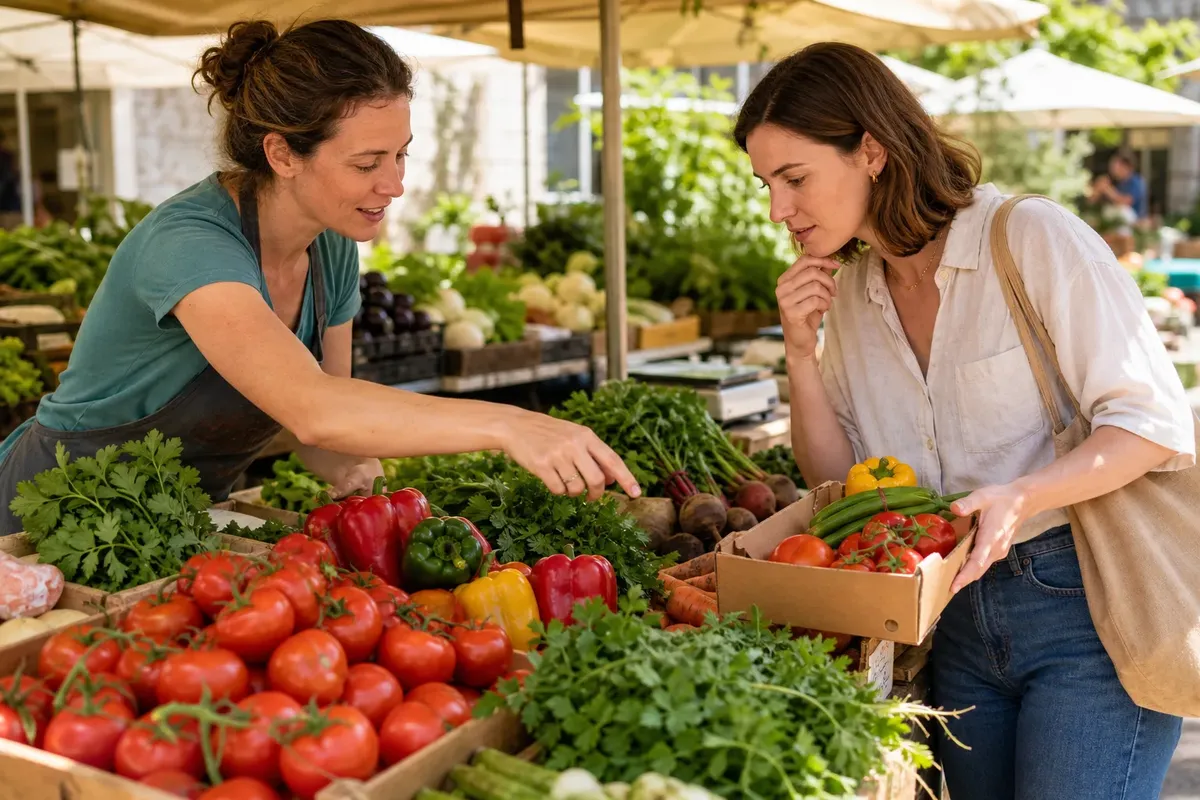
At the Market: Loose Produce or the Prepacked Box?
Loose produce or a prepacked box? Match market produce to your meal, portion needs and appetite…