How to Harvest and Dry Beans for Pantry Storage
Learn how to harvest and dry beans for pantry storage, sort the crop and decide what to do when dampness or storage readiness remains uncertain.
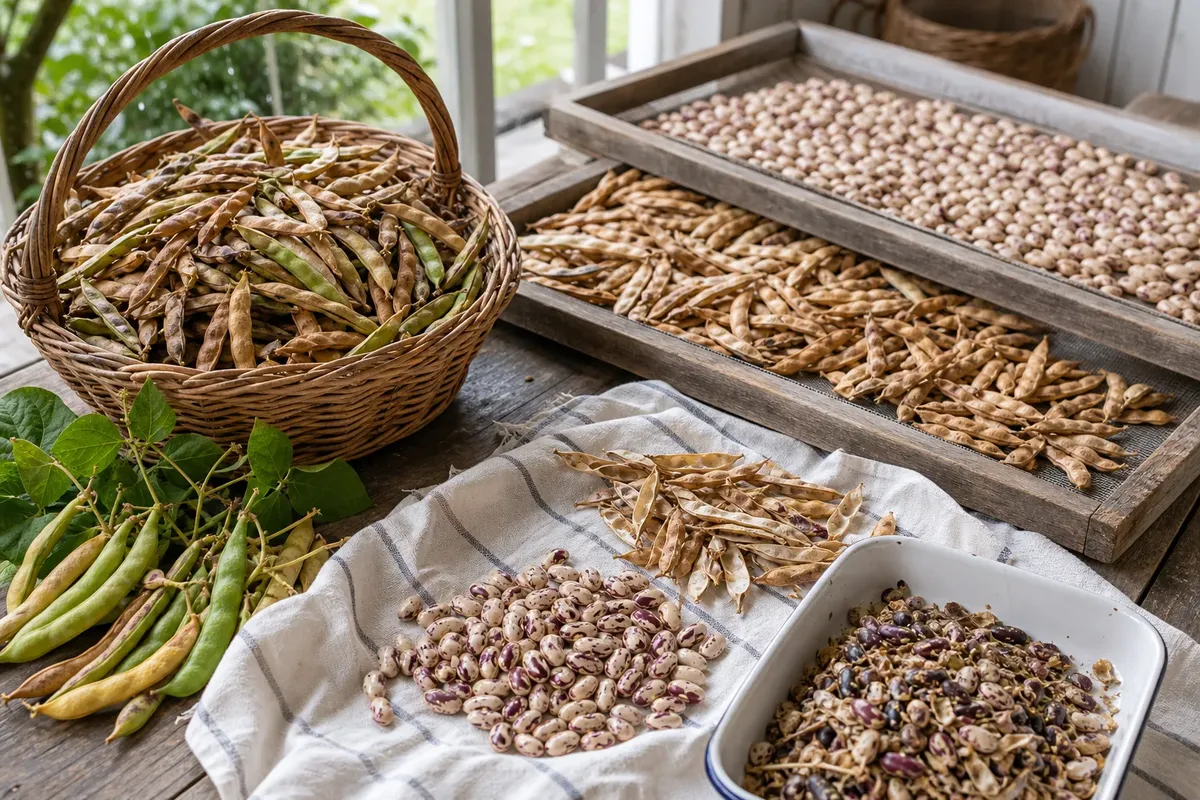
Learn how to harvest and dry beans for pantry storage, sort the crop and decide what to do when dampness or storage readiness remains uncertain.
Ingredients · 5 min read
Rain has passed over the bean rows, and some pods are brown while others are still green. To harvest and dry beans for pantry storage, pick mature pods selectively, then dry and sort them in a clean, airy place. If you cannot establish that a batch is ready for sealed storage, keep it separate and ask the grower or supplier how to handle it.
Which pods are ready to harvest?
Look for pods that have matured beyond the tender stage used for fresh cooking. They often fade or change colour as they dry, and the seeds inside fill out. Leave fleshy, immature pods on the plant where conditions allow, or set them aside for fresh shelling.
Check different parts of the planting rather than stripping every vine at once. Gather mature pods into a clean basket or tray, keeping them away from soil and plant debris. A dry spell can make picking easier, but avoid leaving mature pods exposed if weather or pests threaten the crop.
Where should the pods dry?
Remove leaves, damaged pods and loose debris. Spread sound pods in a shallow layer on a clean screen, tray or cloth. Choose a dry, airy place protected from rain and animals, such as a covered porch, shed or well-ventilated room.
Look beneath the layer as you turn the pods. If moisture is collecting on the surface below, move them to a drier, airier spot and spread them out again. Avoid deep piles, where dampness can be harder to notice.
Separate pods with mould or a musty smell from the sound crop. If damp weather continues, or you are unsure how to handle the variety, ask the grower or seed supplier for advice suited to local conditions.
How do you shell and sort the beans?
Shell pods over a clean cloth or tray when they open readily. Spread the beans in a shallow layer if they need further drying. A hard feel, dry-looking surface or dent test cannot establish that beans are dry enough for long-term storage.
Sort in good light. Remove pod fragments, stones and other debris. Set aside beans that are shrivelled, split, discoloured or visibly damaged by insects. Keep varieties separate if you want to track their cooking qualities or follow local seed-saving practice.
Sorting removes debris and damaged seeds; it does not resolve uncertainty about drying. If you do not have reliable, variety-specific guidance for judging readiness, do not seal the batch away for pantry storage. It is not worth polishing every bean until it looks identical: remove debris and doubtful seeds, then focus on keeping batches separate and getting sound drying advice.
How can you decide what to do with an uncertain batch?
- Inspect the drying place: If it stayed dry, airy and protected from rain, continue the visual inspection; if it was damp or enclosed, keep the beans unsealed and ask the grower or supplier how to proceed.
- Look over pods and seeds: If some remain soft or leathery, separate them from the rest and seek advice before deciding whether to continue drying; if they appear dry, do not treat appearance alone as proof that they are ready to store.
- Check for mould or a musty smell: If either is present, keep affected material apart; if signs are widespread or hard to assess, do not use the batch as pantry beans without qualified guidance.
- Inspect the container for condensation: If moisture appears after packing, separate the batch and ask the supplier how to handle it; if the container looks dry, continue checking but do not take that as confirmation of safe dryness.
- Look for pests or visible damage: If you find affected beans, separate them and inspect the remaining crop; if you cannot distinguish sound beans from doubtful ones, keep the batch apart and seek advice.
- Ask about the variety and local conditions: If the grower or supplier can explain how to judge readiness for this crop, follow that guidance; if no reliable advice is available, do not rely on touch or a dent test to settle the storage decision.
Once reliable guidance indicates that a batch is ready, put it in a clean, dry container with a secure lid. Keep the container away from direct light, damp walls, sinks and hot cooking areas. Label the variety and harvest season, and check for condensation, musty odours or pests. If a problem appears, separate the container from sound batches and ask for advice.
What do cooks ask about drying beans?
Are dried beans the same as fresh shelling beans?
No. Fresh shelling beans are moist and tender, so they are not a dry pantry ingredient. Keep them apart from beans intended for drying.
Can you dry beans indoors?
Yes, if the room is clean, dry, airy and protected from rain and pests. Spread pods or shelled beans in a shallow layer, and seek local advice if damp conditions persist.
Should you store beans in their pods?
Either method may suit your space and local conditions. Shelled beans are ready to use, while intact dry pods can be left unshelled; neither method makes a damp batch suitable for sealed storage.
What should you do if beans may still be damp?
Keep them separate and unsealed, then ask the grower or supplier for variety-specific guidance. Do not use a touch test alone to decide that they are ready for long-term storage.
What does a careful harvest-to-pantry decision look like?
Say a household has a hypothetical harvest of two baskets: one basket of mature pods picked in dry weather and one picked after rain. They spread both in separate shallow layers on clean screens in an airy shed, label the baskets “dry-weather pick” and “rain-exposed pick”, and check for dampness, mould and musty odours. They find visible mould on a few rain-exposed pods, remove those pods from the sound crop, and keep the remaining rain-exposed beans separate. After shelling, they sort out split and discoloured beans from both baskets. Because they have no variety-specific guidance confirming readiness, they leave both batches unsealed and ask the grower how to handle each one; they do not label either batch as ready for pantry storage.
For advice on how to harvest and dry beans for pantry storage, give the grower or supplier the useful details: variety, whether pods were exposed to rain, where they dried, and any signs of mould or condensation. That context can help you choose the next action without treating appearance as a reliable moisture measurement.
Stay at the table
Why Orchard Fruit Ripens in Waves
Why orchard fruit ripens in waves: compare canopy positions and fruit signs so you can pick…
At the Market: Loose Produce or the Prepacked Box?
Loose produce or a prepacked box? Match market produce to your meal, portion needs and appetite…