The Myth of One Original Recipe
The myth of one original recipe need not flatten a valley dish into a single version. Learn how to record its local ingredients, methods and changes.
The myth of one original recipe need not flatten a valley dish into a single version. Learn how to record its local ingredients, methods and changes.
Foodways · 5 min read
The lentil stew at your cousin’s table smells of toasted cumin and tastes sharper than the one you know. The myth of one original recipe can turn that difference into a dispute, even when each cook is drawing on a distinct household and place.
To understand a dish, trace its ingredients and method to the kitchen, garden or market that shaped them. Record what is remembered, what is observed and what has changed; that gives the recipe context without forcing every version into one account.
What makes a valley dish recognisable?
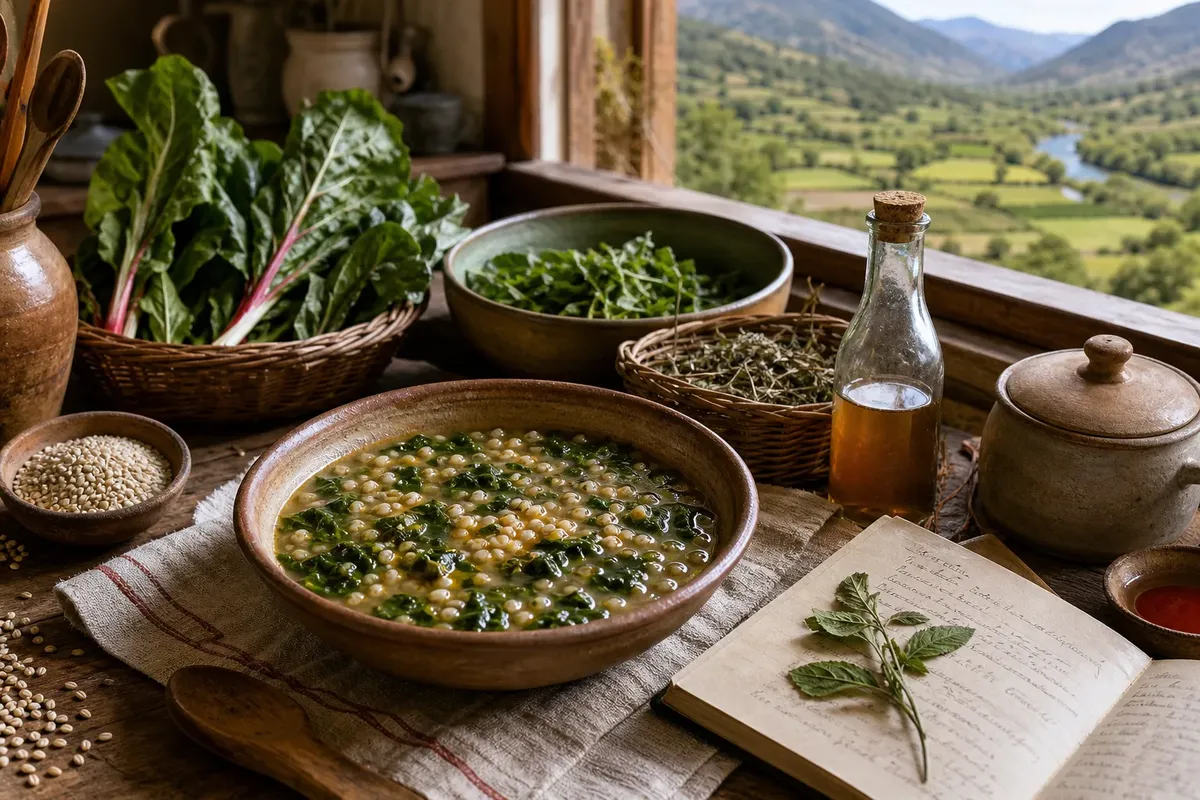
A dish’s identity may rest on a grain, a cooking method or the season when people make it. In a valley where barley grows and market gardens supply greens, a barley soup may be associated with winter stores and whatever leafy crop is ready. Another household might remember the soup chiefly for its sour finish or the way the barley thickens the broth.
These details are more useful than a bare claim that a recipe is “traditional”. Ask who cooked it, where its ingredients came from and what it was served with. A market name, a local crop or a particular occasion can help place a version in its foodway, but do not claim a wider custom from one family’s memory.
Keep the cook’s own words where you can. If someone recalls adding greens from a kitchen plot, note that as their account, rather than turning it into a rule for the whole valley.
How do you compare two family versions?
Compare a few concrete features instead of asking which recipe is authentic. Note the main ingredients, texture, seasoning, cooking order and occasion. Then ask what each feature does: does a late addition keep a leaf bright, or does a longer simmer make the broth thicker?
Separate what you know from what you infer. A relative may remember a dish from one cook and a written card may record another person’s adaptation. Both are useful records, but they are not evidence of a single original form.
Say you have two remembered versions of valley barley soup: one uses garden greens and vinegar, the other dried herbs and no sour finish. If both cooks are named in your notes, record each ingredient list and method under that cook’s name, then ask each person what occasion they associate with it. The result is two traceable versions and a question to investigate, not a forced compromise or a verdict about which is genuine.
How can you adapt a recipe and record the change?
Start with the quality you want to keep: perhaps a tart finish, a soft grain or the fresh taste of greens. Change an ingredient for a clear reason, then note what you used, when you added it and what changed in the bowl.
For example, imagine your usual shop has no fresh sorrel for a barley soup, but a nearby market has a sharp-tasting leafy green. Use a small handful in place of the sorrel, stir it in near the end, then taste before adding vinegar. If the soup still has the bright finish you wanted, record the substitution; if it tastes too mild, add a little vinegar and note that adjustment too. These invented details show a possible kitchen decision, not a claim about a local tradition.
When collecting a recipe, this short record is often enough to make the next attempt clearer:
- Cook and source: If the cook and source of a remembered detail are known, record both; if not, mark them unknown rather than guessing.
- Season and occasion: If the dish is tied to a season or gathering, write that down; if no occasion is recalled, leave the field open.
- Ingredients: If an ingredient came from a garden, market or store, note which; if its source is uncertain, separate that uncertainty from the ingredient itself.
- Method and cue: If the cook remembers a smell, colour or texture, record it beside the action; if not, do not invent a cue.
- Substitutions: If an ingredient changed, name the original and replacement; if no change is remembered, say so.
- Version name: If the cook or household is known, label the version accordingly; if not, use a neutral description such as “market-stall version”.
What does “authentic” mean in a family kitchen?
Can a recipe stay recognisable after an ingredient changes?
It can, if the cook names the substitution and explains which flavour or texture they intended to keep. Record the altered ingredient rather than presenting the adaptation as the version everyone has always made.
Should you follow an old recipe exactly?
Follow its instructions closely when your aim is to recreate that particular account. If an ingredient or tool is unavailable, note the change and the result so the next cook can distinguish memory from adaptation.
How should you handle conflicting family memories?
Write down who remembers each version and which details they recall. If accounts differ, preserve the difference in the record instead of choosing one person’s memory as the definitive recipe.
Are cooking cues useful without exact quantities?
Yes: a cue such as “add greens when the barley is tender” can clarify timing. Pair it with quantities when the cook remembers them, and mark amounts as approximate when they are not precise.
What is not worth the effort?
It is not worth policing a garnish or a small seasoning change just to name a winner. Spend the effort on details that help someone cook or understand the dish: who made it, what ingredients were available and which method shaped its texture or flavour.
For the myth of one original recipe, a useful record is a map of related versions, not a search for a master copy. Keep each account attached to its cook and place, and let the notes show how valley crops, market choices and household routines influenced the meal.
Stay at the table
Why Orchard Fruit Ripens in Waves
Why orchard fruit ripens in waves: compare canopy positions and fruit signs so you can pick…
At the Market: Loose Produce or the Prepacked Box?
Loose produce or a prepacked box? Match market produce to your meal, portion needs and appetite…