At the Market: Loose Produce or the Prepacked Box?
Loose produce or a prepacked box? Match market produce to your meal, portion needs and appetite for seasonal surprises before you buy.
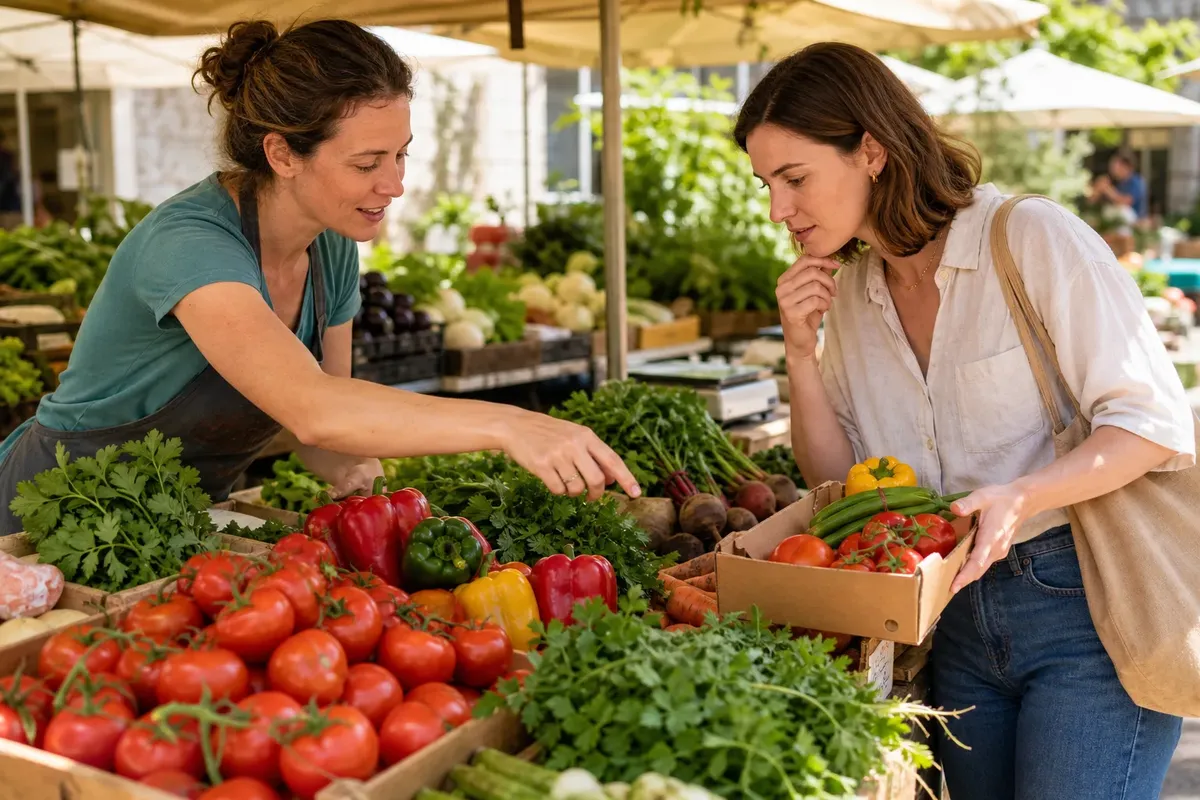
Loose produce or a prepacked box? Match market produce to your meal, portion needs and appetite for seasonal surprises before you buy.
Markets · 6 min read
You need a few tomatoes for supper, but the market offers them loose and in a mixed box. Choosing loose produce or a prepacked box comes down to what you plan to cook, how much you can use and whether you want to select each item.
How does loose produce differ from a prepacked box?
Loose produce lets you choose from an open display, though it may be sold by the piece, bunch or another set unit. A prepacked box has a fixed assortment selected before you arrive. It may group crops by season, recipe or type.
The distinction is useful in a valley market, where a stall might offer individual roots alongside a box of crops ready at the same time. Neither format tells you, by itself, how well the produce suits your cooking. Check the contents and the choices the seller allows.
When is loose produce the better choice?
Loose produce suits a specific recipe, a small top-up or a kitchen with little room for extras. You can choose the items you need and, where the seller allows, compare individual pieces. Ask whether a crop is sold singly or only in a bunch before counting on a particular quantity.
It can also make trying an unfamiliar local variety less of a commitment. Ask the grower or stallholder what the variety is called and how it is commonly cooked. What you can learn will depend on what the seller knows and chooses to share.
The trade-off is that you make more individual decisions. A busy stall may not be the place for a long conversation, and a loose display may offer little written information. Keep it simple: choose loose when selecting the ingredients or quantity matters more than getting a ready-made mix.
When does a prepacked box make more sense?
A box can suit a meal that uses its contents, or a cook happy to shape a menu around a seasonal assortment. It may save you from choosing each crop separately. Read the contents list, if there is one, or ask the seller what is included.
Check for ingredients you already have, do not cook or cannot use in the planned meal. If the box includes a less familiar crop, ask for a preparation suggestion rather than assuming it will suit your usual recipe. Ask, too, whether substitutions are allowed; the seller may offer a choice, or the box may be fixed.
How do you compare loose produce and a prepacked box?
- Meal plan: If the loose display contains the ingredients for your named dish, choose those; if the box matches the dish, consider it; otherwise, ask about substitutes or select another combination.
- Amount needed: If the loose produce can be bought in the amount you need, choose it; if it is sold only in larger units, ask about a smaller option or compare the box contents.
- Box contents: If every listed crop has a use in your kitchen, the box may suit; if an ingredient has no planned use, ask for a swap or choose loose items.
- Inspection: If you want to select each piece and the display is open, choose loose; if a box is sealed or hard to inspect, ask what you may check before buying or select from the display.
- Information: If a label gives the variety or origin you need, use that detail; if it leaves a question unanswered, ask the seller or avoid relying on an assumption.
- Seasonal discovery: If you are happy to adapt a meal to unfamiliar crops, consider the box; if you want to try only one new ingredient, ask whether it is sold loose or choose a different item.
These checks need not turn a market visit into an inspection. The box contents and your meal plan usually settle the choice; ask only about details that could change what you buy.
What should you ask before buying?
A direct question can clarify a point that packaging or appearance does not answer. Ask about the crop, the contents or the options available, rather than trying to infer details from the display.
- Which varieties are in the box?
- Can I see a list of its contents?
- Can I buy a smaller amount or change an item?
- How do you usually cook this crop?
- Where was the produce grown?
Ask about claims that matter to your choice, such as origin or growing method. A label may not answer every question; if the answer is unclear, ask the seller or market operator rather than assuming.
Which format suits common market plans?
Imagine you have two tomatoes and a bunch of herbs at home, and want to make a vegetable tart. You need one pepper and a little parsley for the filling. First, check the loose stall: the pepper is available singly, but parsley is sold only in a large bunch. Then read the box card: the box includes parsley, several peppers and roots you have no dish planned for. Ask whether the box can be altered; the seller says it is fixed. The resulting choice is loose for the single pepper and a smaller herb option elsewhere if available, rather than buying unwanted roots. If the stall has no suitable herb portion, you can adjust the recipe or leave the tart for another day.
That example uses invented quantities and choices, not a claim about a particular market. The useful comparison is the same: count what you need, check what each format contains and decide what you will do with anything left over.
What do shoppers often ask about loose produce and boxes?
Is loose produce better for a small household?
It may suit a small shop when you can buy the amount you need. Check whether the produce is sold singly, by weight or in a fixed bunch, then choose a box only if its assortment fits your meals.
Is a prepacked box better value?
Consider whether you will use its contents, rather than judging by how full it looks. If several items have no place in your meals, ask about a different mix or choose loose produce.
Can a label answer questions about a crop?
A label can state details such as contents, variety or origin, but it may not cover everything you want to know. Ask the seller about missing details and do not infer growing methods from appearance alone.
Can you choose some items from a box?
Ask whether the seller allows substitutions or sells the items separately. If the mix is fixed and includes crops you will not use, choose loose items or another available assortment.
What is not worth the effort?
There is little benefit in comparing every item on the stall when you already know what your meal needs. Nor do you need to choose a box just because it presents itself as a seasonal mix. Check the contents, ask one useful question if needed, and decide.
For loose produce or a prepacked box, start with the food you intend to make and the ingredients already in your kitchen. Loose produce suits a precise choice; a box suits a ready-made assortment you expect to use. That simple check can also leave room for a seasonal ingredient when you genuinely want to cook with it.
Stay at the table
A First Market Morning: What to Notice Before You Buy
A first farmers’ market visit is easier with a route, a note of local customs and…